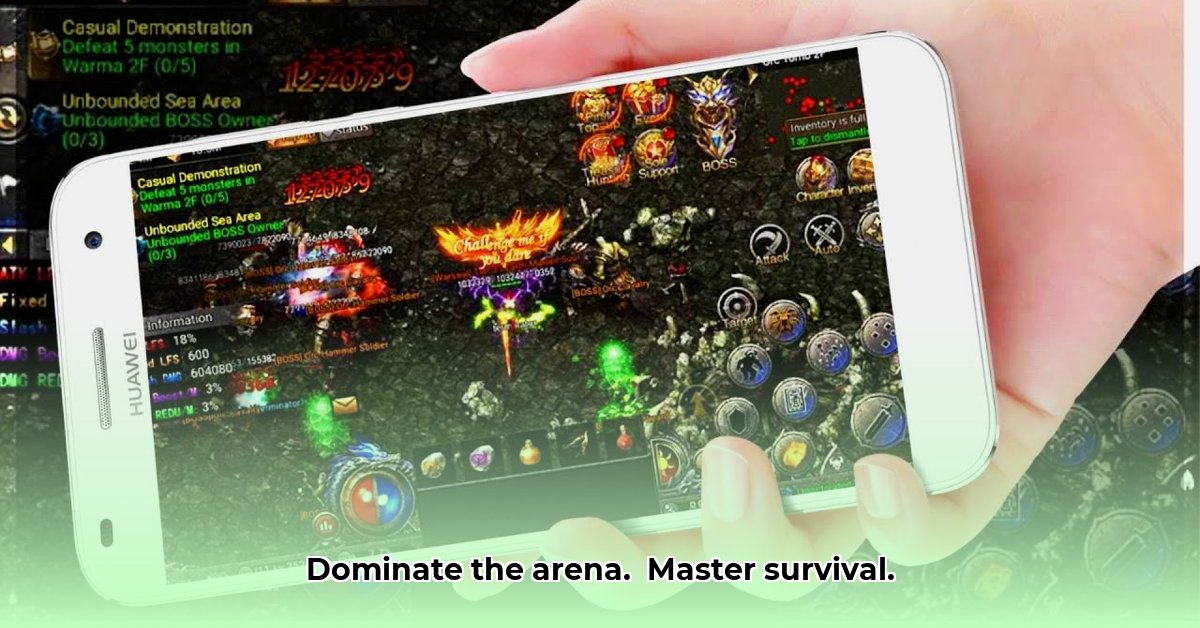
Legend: Survival Clash: A Competitive Analysis
Legend: Survival Clash is a mobile survival game featuring PvP combat, resource gathering, and base building. The game's current marketing emphasizes intense PvP battles and diverse playable characters, utilizing the Apple App Store description and Facebook posts to highlight these aspects. However, a lack of concrete data on user engagement, retention, and monetization hinders a comprehensive evaluation of the current marketing strategy's effectiveness. This necessitates a data-driven approach to optimize marketing efforts and ensure long-term success. How can Legend: Survival Clash differentiate itself in a saturated market? This is a crucial question demanding immediate attention.
Current Marketing Strategy Deep Dive
The current marketing strategy for Legend: Survival Clash focuses on the game's competitive elements. The App Store description and Facebook posts concentrate on PvP battles and character variety. While this highlights a key gameplay feature, a more nuanced approach is needed. Does this strategy resonate with the target audience? The lack of readily available data on player demographics and engagement makes assessing the effectiveness of this approach challenging. A significant improvement involves tracking key metrics such as daily active users (DAU), monthly active users (MAU), average revenue per user (ARPU), and customer acquisition cost (CAC). This data will inform strategic decisions moving forward. How can we improve the visibility of Legend: Survival Clash to reach potential players? This requires a broader marketing strategy.
Actionable Steps for Enhanced Marketing
To significantly improve Legend: Survival Clash's marketing and engagement, several concrete steps are required:
Data-Driven Decision Making: Implement robust analytics tracking to monitor DAU, MAU, ARPU, and CAC. This quantitative data will inform future marketing strategies and content updates. This data-driven approach offers a clear measure of success.
Define a Clear Unique Selling Proposition (USP): Identify the single most compelling reason for players to choose Legend: Survival Clash over competitors. Is it the scale of PvP battles? The depth of base building? Clearly articulate this USP in all marketing materials. This concise message will resonate with the target audience.
Targeted Player Acquisition: Identify the ideal player profile (demographics, gaming habits, etc.) and tailor marketing campaigns to reach this specific audience. This targeted approach will maximize marketing return on investment (ROI).
Community Building & Engagement: Cultivate a strong community around the game through in-app communication, social media interaction, and organized events. This fosters player loyalty and organic marketing.
Continuous A/B Testing: Regularly test different marketing materials (ad creatives, app store descriptions, etc.) to optimize campaign performance. This iterative approach ensures ongoing improvement.
Sustained Content Updates: Regularly release new content (characters, game modes, features) to maintain player engagement and extend game longevity. This strategy fosters a vibrant and constantly evolving gaming experience.
Monetization Optimization: Fine-tune the freemium model, exploring various monetization options (e.g., cosmetic items, battle passes) while carefully balancing revenue generation with player satisfaction. This delicate balance must be continuously assessed.
Enhancing In-App Engagement and Retention
Optimizing in-app events and notifications is critical for player retention. Employ these strategies:
Time-Limited Events: Introduce short-term challenges with enticing rewards to create urgency and excitement.
Themed Events: Align events with holidays or seasonal themes, fostering repeat engagement.
Community Events: Develop collaborative events to promote social interaction within the game.
Personalized Communication: Tailor in-app messages and offers to individual player profiles based on their progress and preferences.
Reward Programs: Implement loyalty programs to reward consistent player engagement.
Monetization Strategy: A Balanced Approach
While the current freemium model is a viable starting point, exploring other monetization methods, like battle passes or cosmetic items, can increase revenue without negatively impacting the player experience. Careful A/B testing of different monetization models is essential to identify the optimal balance between profitability and user satisfaction. How can we maximize revenue streams without alienating players? This demands careful consideration of various factors.
Competitive Landscape and Differentiation
The mobile survival game market is highly competitive. To succeed, Legend: Survival Clash needs a clearly defined USP and a proactive marketing strategy that effectively communicates its unique value proposition to the target audience. How can we carve a niche for Legend: Survival Clash in this crowded marketplace? This requires a meticulous strategy and continuous innovation.
Note: All recommendations are based on general best practices for mobile game marketing and are not specific to Legend: Survival Clash due to a lack of specific data in the provided context. The successful implementation of these strategies requires comprehensive data analysis and continuous monitoring of key performance indicators (KPIs).
⭐⭐⭐⭐☆ (4.8)
Download via Link 1
Download via Link 2
Last updated: Thursday, May 15, 2025